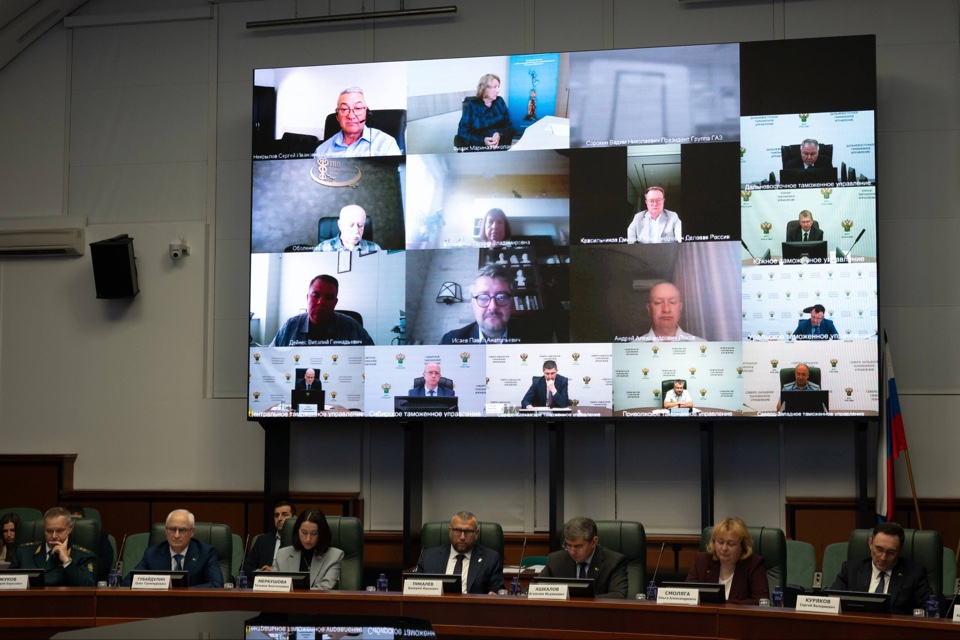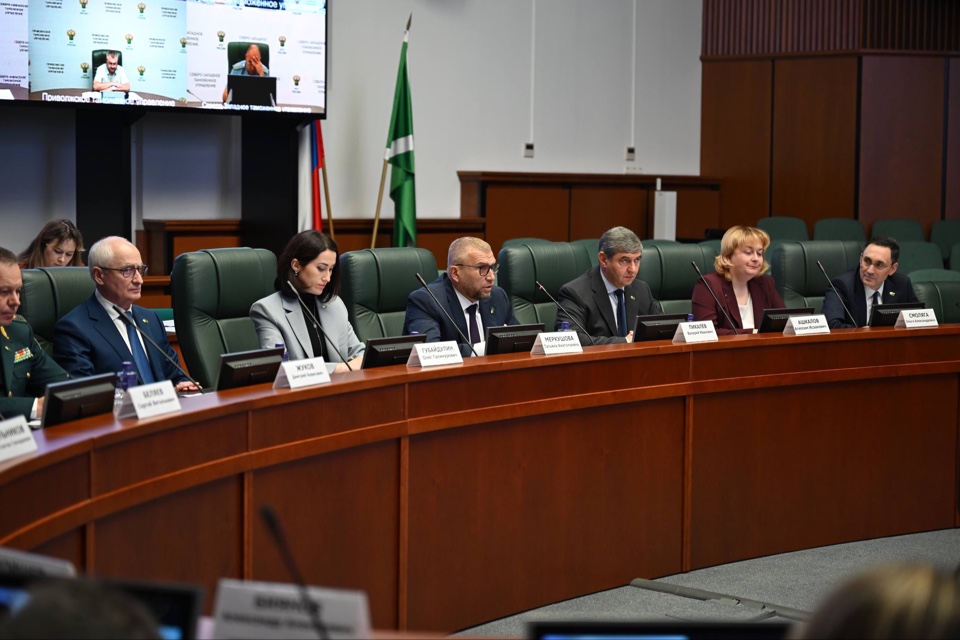
The Federal Customs Service held a meeting of its Public Council, bringing together customs officials and business representatives from across the country in person and online. Source: FCS Russia.
FCS Russia head Valery Pikalyov thanked council members and chair Leonid Lozbenko for their contribution and stressed the need to take business views into account, especially when speeding up and simplifying procedures.
A new line of work is the Service’s controlling role in SPOT, the national system for confirming expected goods deliveries. According to the FCS head, the system has not created border barriers: refusals to issue electronic documents confirming expected delivery (DOPP) stay below half a percent, and compliant foreign-trade operators view the practice positively.
The launch followed work to keep the system stable and to train mobile groups. Further proposals are being prepared to upgrade border-crossing points so freight can move faster and officers have better working conditions.
A strategic priority is the shift to EAIS TO 2.0: a single digital platform should cover all processes and cut routine work for inspectors, focusing control on analytical quality and more precise targeting of checks. Digitization of post-release control is cited as a model for updating other areas with regional practice and business input in mind.
Staffing and mentorship were also discussed: FCS Russia is deepening ties with universities and involving students in digital tools. From 20 to 24 July the first All-Russian Youth Customs Forum is running to mark the Service’s 35th anniversary. The anniversary year, Pikalyov said, should be a starting point for both technology and better conditions of service.
Council chair Leonid Lozbenko highlighted the growing role of customs administrations in the world economy and spoke highly of the Service’s ongoing reforms.
Under sanctions and changing logistics routes, FCS Russia is adapting electronic declaration centres (CED): goods declarations are now dispatched dynamically to the least loaded CED. At business request, general dispatching rules apply only to the first pre-declaration release application (ZVT) for a consignment; later applications for the same consignment go to the CED that registered the first declaration.
Further tweaks include adjusted post schedules so declarations can be filed regardless of time zone; no dispatch of declarations in the last four hours of a CED’s working day, so perishable goods can be released on the day of filing; and refined algorithms for authorised economic operators releasing goods before lodging a declaration.
Participants also covered navigation seals, veterinary confirmation of EAEU goods status, customs valuation and payment of increased duties. FCS Russia posts expert webinars on topical issues on its official website.